The brand and the software, drawn by the same hand
Most businesses buy design and software from different people. The logo comes from one place, the website from another, and the system the staff actually works in all day from a third. None of them have met. So the brand stops at the front door: the part customers see is considered, and the part your own people use looks like a spreadsheet with a headache.
I do both, and I was a designer first. Twenty-nine years of it, on paper and on screen, and I still have the files.
From a business card to the screen your staff logs into
Identity
The mark, the colors, the type, and the rules that keep them consistent when someone else has to use them. A logo is the easy part. A design language is the thing that still holds up two years later, on a form nobody asked me about.
Business cards, brochures, signage, vehicle graphics, packaging. Anything that has to survive being physical. Print is unforgiving, because it can’t be patched after it ships, and that is a useful discipline to have learned young.
Advertising
Campaigns, not just artwork. The part that moves a business is the idea and the promise underneath it. The layout is how you keep that idea intact on the way to a customer.
Websites
Designed and built, not designed and handed to somebody else to approximate. The gap between a design and what actually ships is where most brands quietly lose their edges.
Social
Templates and a system your own people can use, so posting doesn’t wait on me being available. The point is that it still looks like you when I’m not in the room.
The software itself
The screens your staff live in. This is where nearly every company gives up on design, and it is the surface their people stare at for eight hours a day.
It should all be one system
Your business card, your website, your invoice, the screen a warehouse worker taps at seven in the morning, and the dashboard you check from bed are all the same business talking. When different people build them, they stop looking, sounding, and behaving like the same company. Worse, your staff quietly learn that the internal tools are the ugly ones that don’t matter.
When it is one system, the design language runs the whole way through: the card in someone’s wallet, the page they land on, the confirmation email, the portal where they check their order, and the screen your people use to make it happen. Same shapes, same rules, same voice. Everything is easier to learn, and nothing looks bolted on.
And because it is one system, the things a business normally has to go hunting for arrive in one place. What sold and what it cost. Which customers came back, and which ones quietly stopped. How this week compares to last. In one dashboard, on your phone, in the same design language as everything else.
BlackLeaf Web Design first, then HyperWebTech, then a studio of my own called ThumbprintUX. Different names, same job: identity, print and screen for whoever walked in. Around fifteen brands over the years, among them a law firm, a powder coating shop and tire and wheel retailers.
I built a Wisconsin district’s first real website while I was still a student in it, then the publishing system eight schools used to maintain their own pages, then the identity for its cable television channel. That publishing system is the ancestor of everything I have built since.
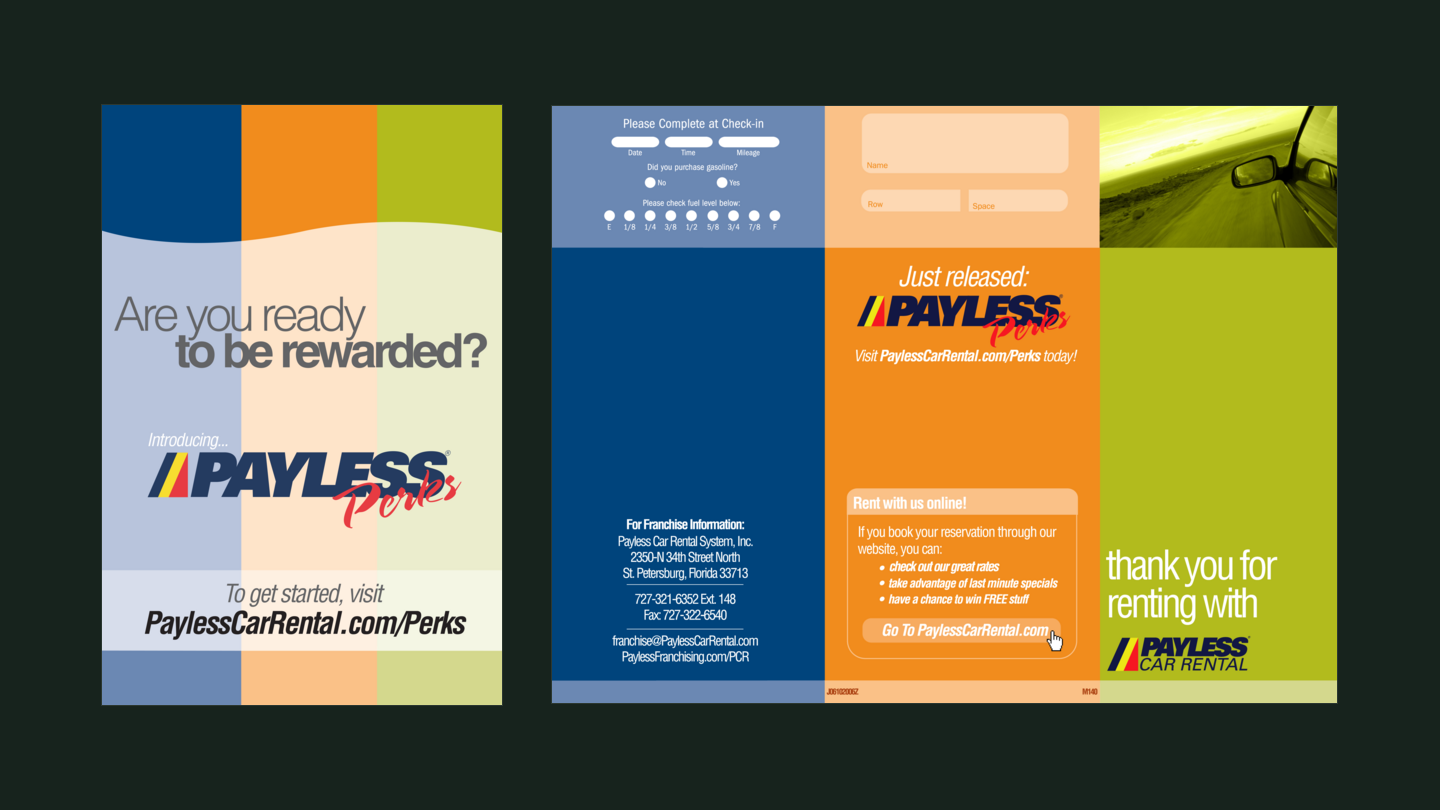
Multi-region work across the corporate site, the employee intranet, the sub-brand sites, print collateral and airport signage. I originated the marketing campaigns that turned the business around. “Just Drive” kicked it off and ran from 2004 through 2008 as a registered Payless service mark.
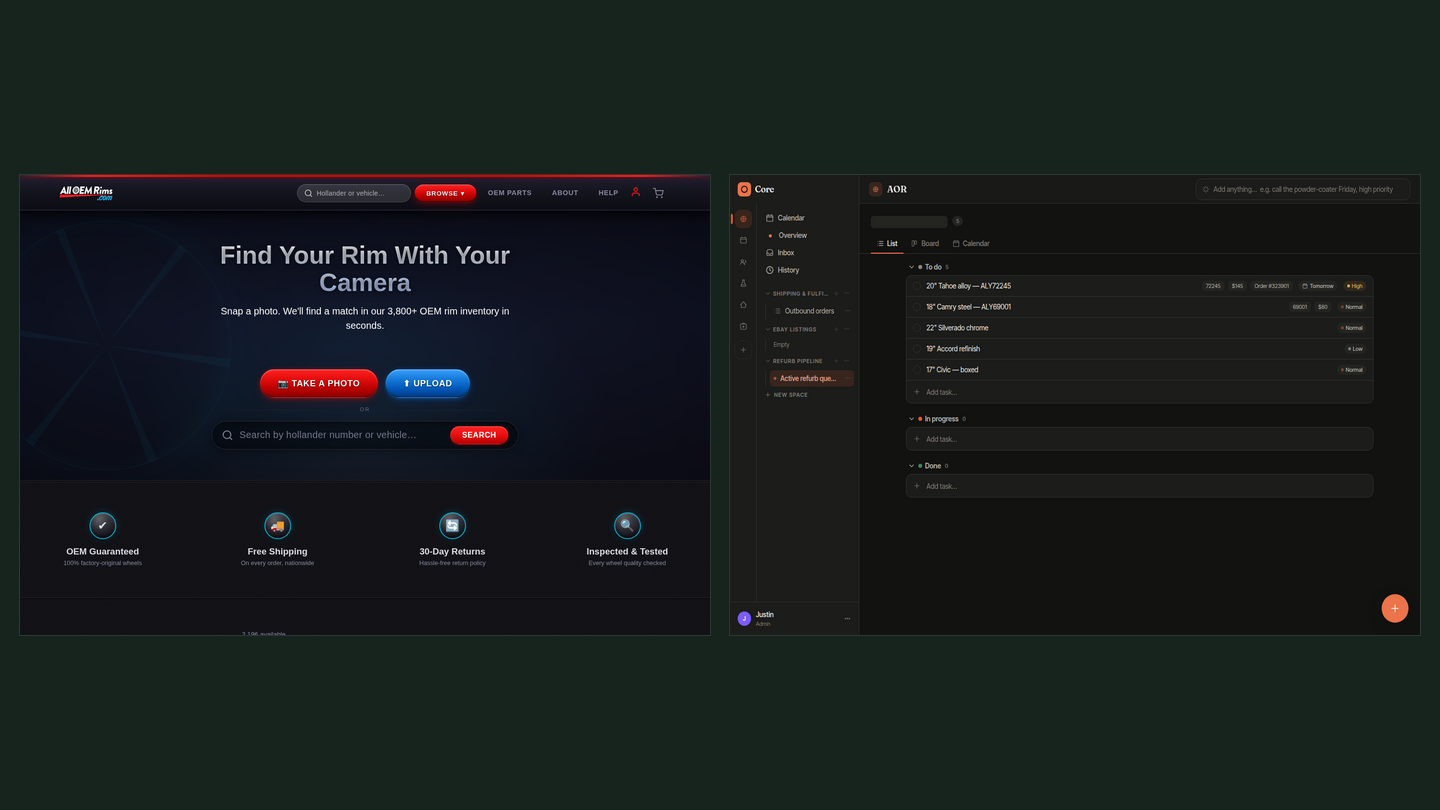
A content management product of my own, deployed across four properties for one national brand and a run of other businesses. The same interface every time, re-skinned per brand, over a shared component library: tabs, message bars, button sets, and every state drawn before anything shipped.
I turned the same instinct on a back office instead of a brand. It is the same job on a different surface: work out how people actually do the work, then design something that moves with them instead of against them.
Just over a thousand of those designs survive as editable source rather than flat pictures, layers and live text intact. That is also why my work is distilled into a documented system of color, type, spacing and component rules: a design language has to keep working after I hand it over.
Worth knowing: I’m one person, so you’re not handing this to an account manager and hoping. The person who draws it is the person who builds it, and the person who still maintains it a year later.
Want to see more of my design work? The portfolio lives at iamjust.in →
Twenty-two of those layouts, drawn between 2002 and 2011, are on the layout wall →
See what the built side looks like in the systems → or start with the thing that annoys you most →