DISC
Proves a drive is what it claims to be.
There is a whole industry of counterfeit storage: a drive that reports two terabytes and actually holds a fraction of that, cheerfully accepting everything you copy onto it and quietly discarding most of it. You find out months later, when you go looking for the files.
DISC tests a drive properly. It writes real data across the whole claimed capacity, reads it back, and checks that what came out is exactly what went in.
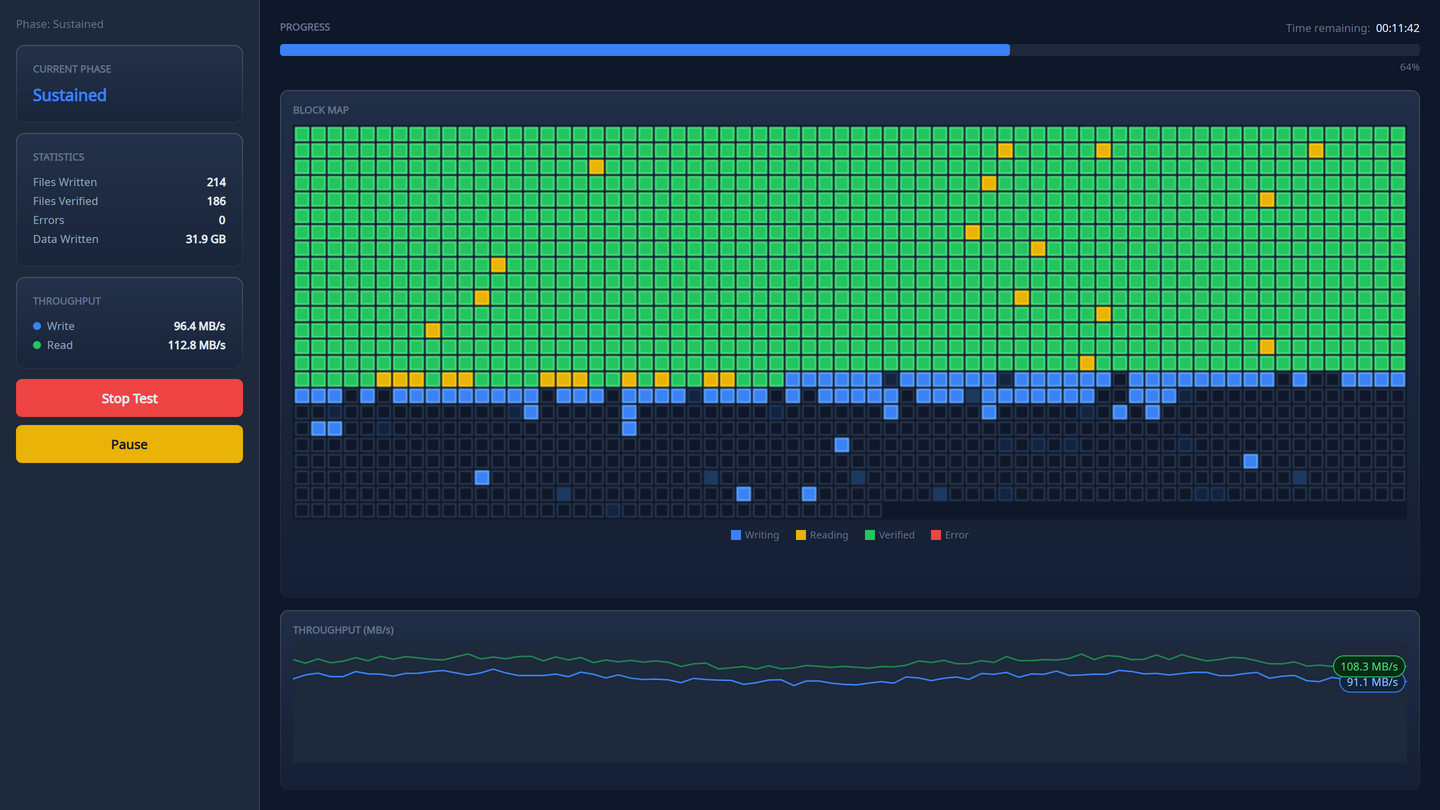
Catches fake capacity
By writing and verifying across the entire claimed size, a drive that lies about how big it is fails immediately instead of a year from now.
Catches silent corruption
Every test file is fingerprinted on the way in and checked on the way out, so bad data is detected rather than assumed to be fine.
Shows the truth about speed
A live throughput graph and a block map, so a drive that starts fast and collapses under sustained writing has nowhere to hide.
Reads what the drive says about itself
It pulls the drive's own health data and interprets it in plain language, instead of handing you a wall of raw counters.
I buy a lot of storage, and I got tired of trusting the label on it.
The pass, warning, or fail grade at the end is deliberate. Most people do not want a report. They want to know whether it is safe to put something irreplaceable on this drive.
What it proves: Verification instead of trust. It is the same reason every file my systems move gets checked after it lands rather than assumed to have arrived.